

The Audi F1 team kicked off the 2026 pre-season testing in Bahrain with an exciting B-spec car that showcases significant advancements in their sidepod design. This bold move, drawing comparisons to Mercedes’ 'zeropod' from 2022, signals Audi's serious intent to compete vigorously in the upcoming season.
Shifting from a more conventional setup seen during the Barcelona shakedown, Audi has implemented a detail-oriented solution with an inverted inlet layout that extends forward and runs vertically along the chassis. The design aims to enhance flow management, although it poses challenges with side impact protection spars, critical for aerodynamic performance.
"The upper of those two always seems to be a bit of a nuisance from an aerodynamic perspective," said a team engineer, shedding light on the design challenges faced. In contrast to Mercedes, which utilized a wing-shaped element to encase its version, Audi has integrated its solution directly into the bodywork, though it slightly protrudes, a common characteristic across the grid.

"The upper of those two always seems to be a bit of a nuisance from an aerodynamic perspective,"
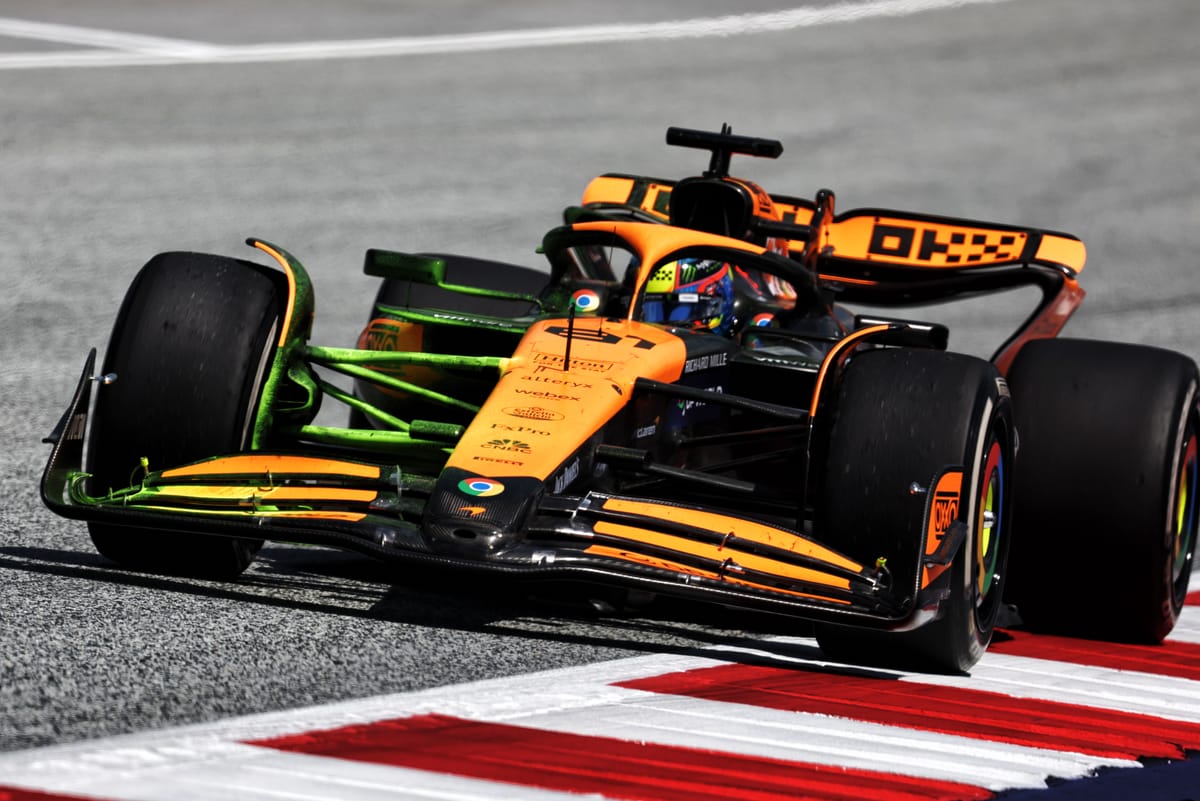
The arrangement of the inlet and spar presents an almost tiered appearance, with the curvature at the front designed to manage the wake turbulence created by the wheels ahead. The upper section reflects familiar design DNA, featuring a continued curvature merging into a pelican-style G-line that extends along the rear of the sidepod.

Team Dynamics

Team Dynamics
Moreover, Audi's updated sidepods incorporate a gentle gulley shape, transitioning the downsloping bodywork into the floor at the rear. This contrasts with the previously established design, demonstrating the team's commitment to innovative aerodynamic solutions.

Team Dynamics
Team Dynamics
The team did not waste any time in gathering data during the test, utilizing kiel probe rakes mounted behind the front wheels and around the rear to analyze airflow. "Our real-world data needs to align well with our virtual simulations," said an Audi technician, indicating their reliance on sophisticated tools like computational fluid dynamics (CFD) and wind tunnels to validate their designs.
"Our real-world data needs to align well with our virtual simulations,"
Beyond the sidepods, Audi's B-spec car includes notable enhancements such as a twin pod active aerodynamics system on the front wing, which replaces the earlier single centerline activation employed at Barcelona. Enhancements to the floor deflector array now incorporate a metal upwashing vane on the front portion, along with a redesigned slat tail structure.
Race Results
Team Dynamics
Audi has also ventured into new territory with its rear wing's active aerodynamic setup. While many teams have favored a traditional DRS setup, Audi's approach is based on a central pivot system. This innovative choice tightens the gap between the mainplane's trailing edge and the first flap's leading edge compared to conventional designs. "This central pivot might offer a more balanced airflow reattachment, trading off slightly on drag for improved handling," explained an aerodynamicist from the team.
"This central pivot might offer a more balanced airflow reattachment, trading off slightly on drag for improved handling,"
As Audi explores these different aerodynamic configurations, it remains to be seen if rival teams will adopt similar strategies or propose alternatives, such as those potentially emerging from Alpine. The variety of designs showcased during these tests suggests a competitive race towards optimizing aerodynamics for the 2026 season.
As the pre-season progresses, teams are discovering distinct aerodynamic solutions that could significantly impact their performance. Audi's strong showing in Bahrain sets a tone for a fascinating season ahead, characterized by innovation and fierce competition in Formula 1.