
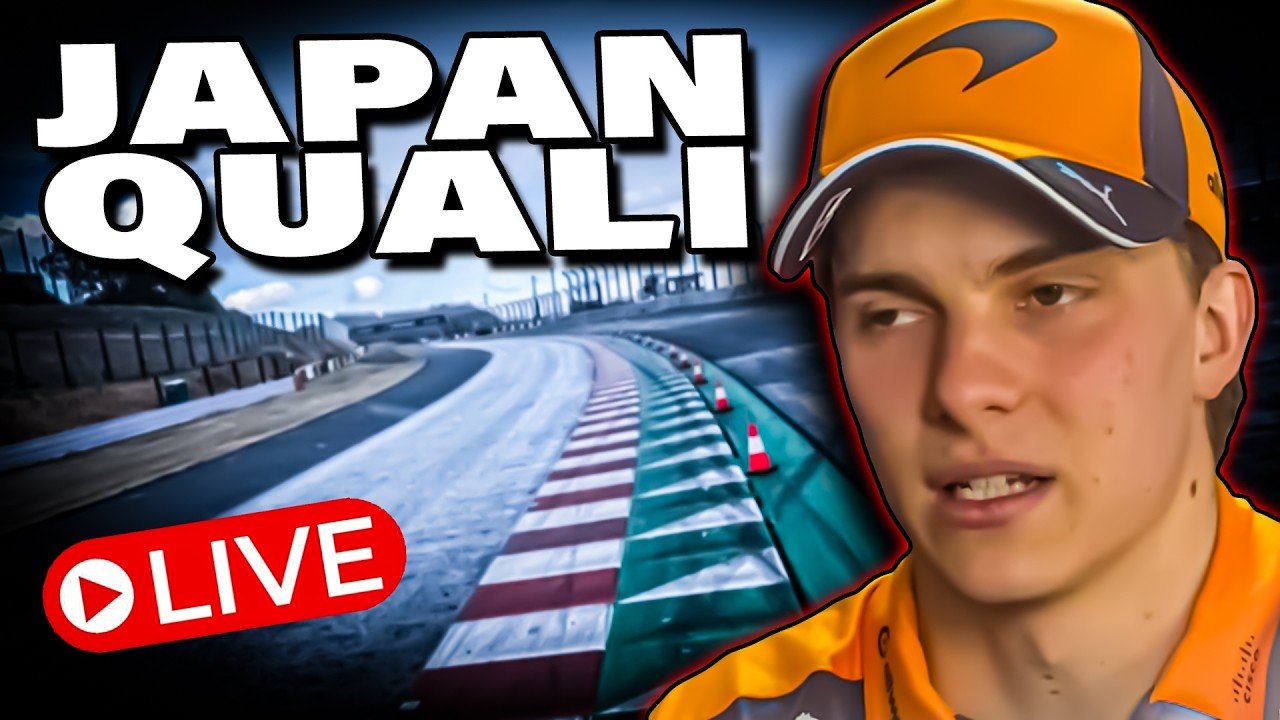
The most interesting Formula 1 rumour of the week did not come from a leaked engine spec or a driver-market whisper. It came from a question most fans would have assumed had been settled in 2008 — which Japanese circuit should host the country's Grand Prix.
Paddock chatter picked up this week about a possible future return of the Japanese Grand Prix to Fuji Speedway, the track Toyota owns and operates. On its own, a calendar rumour is minor. Read together with everything Toyota has been doing behind the scenes, it is not minor at all.
The analyst who put the pieces in the clearest order was LawVS, speaking on his weekly F1 Suzuka preview.

"Fuji rumours. Oh, that's interesting. I've not heard anything about going back to Fuji Speedway," he said. "I mean, if that happened, if we got like more like rumblings coming out of Fuji, that would be very interesting from the angle that is Toyota because you got to remember, whilst Honda is the owner or they operate the Suzuka circuit, Fuji Speedway is Toyota's. And given how they are really dipping their toes in with Haas, that would be just yet another escalation of Toyota wanting to get back into Formula 1."
The geography matters. Suzuka belongs to Honda. Fuji belongs to Toyota. A quiet move to rotate or outright transfer the Japanese Grand Prix from one to the other would be the biggest symbolic shift in Japan's Formula 1 footprint in a generation — and the only party who would plausibly benefit from it is Toyota.
The underlying fact is that Toyota is already back in F1 in all but name. The manufacturer's "technical partnership" with Haas — announced in late 2024 and expanded since — involves chassis design support, aerodynamic development work and access to Toyota's Cologne wind tunnel and simulators. Haas has publicly acknowledged that Toyota-branded staff are now embedded across its race and development operations. The partnership does not put a Toyota badge on a Haas car, but it gives the Japanese firm something far more useful: a real-time dataset on what running a modern F1 team actually costs and requires.
The Fuji rumour slots into that pattern as the next logical escalation. Hosting, or co-hosting, the Japanese Grand Prix at a Toyota-owned venue would give the manufacturer a marketing platform at its home race, a continuous line of sight to every team in the paddock, and the kind of infrastructure investment any eventual full entry would lean on.
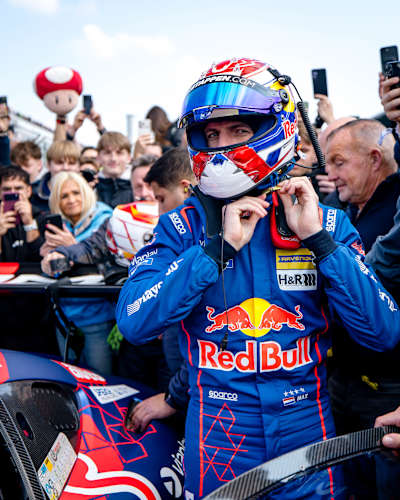
Honda, meanwhile, is not quietly exiting Japan. It is officially committed to an in-house Aston Martin power unit programme from 2026 and has expanded its F1 engineering footprint rather than shrunk it. Suzuka will not be losing its race any time soon without a fight, and Honda's senior management have been explicit that the circuit's Formula 1 contract is a strategic priority.
But the pattern in F1 over the past two decades has been rotation rather than replacement — Belgium and France sharing a calendar slot, Germany dropping in and out, Imola returning to supplement Monza. A Japanese Grand Prix rotation between Suzuka and Fuji, engineered in a way that lets F1's commercial arm tap two different corporate sponsors and two different regional markets, is exactly the kind of commercial idea Liberty Media tends to entertain.
Toyota's larger ambitions remain officially undeclared. The company has spent 17 years insisting publicly that its 2002-2009 F1 project left no appetite for a full return, and the Haas partnership is carefully framed as a support arrangement rather than a pre-entry. The Fuji rumour does not change that official position.

The next signs to watch are small and specific. A Fuji upgrade programme. An expanded Haas-Toyota badge presence on the car. A paddock hire pattern that pulls experienced F1 engineers into Toyota's Cologne operation. Any one of those alone would be a rumour. Taken with a Fuji calendar move, they would look like the slow early stages of an announcement F1 has been waiting for since Honda left and came back, since Audi arrived, and since Cadillac's 2026 entry made a Japanese manufacturer return feel less impossible than it did five years ago.
The Fuji whispers are not confirmation of anything. They are, in the way F1 stories usually start, a single thread that becomes interesting the moment you pull on it.
---
*Originally published on [News Formula One](https://newsformula.one/article/toyota-fuji-speedway-f1-return-rumors-lawvs-analysis-2026). Visit for full coverage.*