
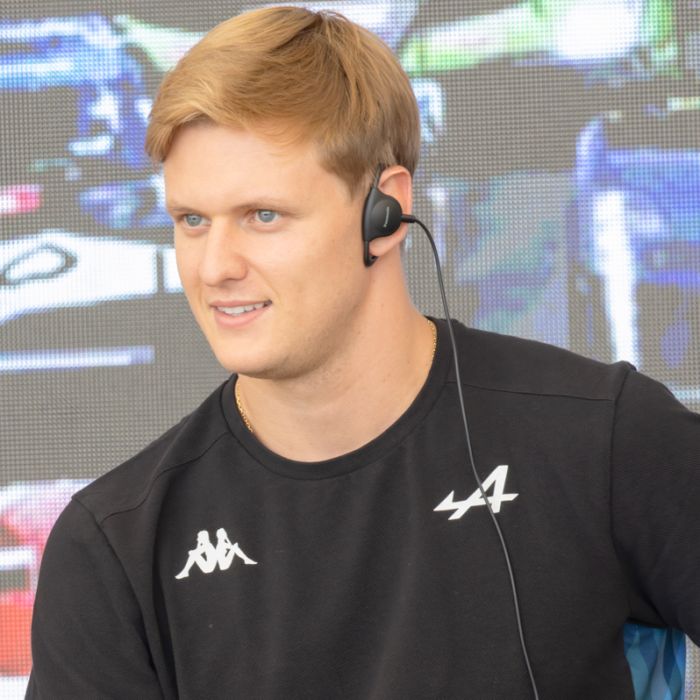
The Schumacher name returns to single-seater racing's spotlight as Mick Schumacher embarks on a new chapter in his motorsport career, trading the endurance racing circuits of the World Endurance Championship for the ovals and road courses of the IndyCar Series. The 27-year-old German driver has joined Rahal Letterman Lanigan Racing for the 2026 season, piloting the No. 47 Dallara-Honda in what represents perhaps the most significant career pivot for any driver carrying such a legendary surname.
Born on March 22, 1999, in Switzerland, Mick Schumacher has lived his entire life under the considerable shadow of his father, seven-time Formula One World Champion Michael Schumacher. Yet his journey to IndyCar has been anything but predictable, marked by both triumph and adversity that has shaped him into a driver seeking to forge his own legacy in American open-wheel racing.
Schumacher's early career showed immediate promise. Initially competing under pseudonyms 'Mick Betsch' and 'Mick Junior' – perhaps an early attempt to establish his own identity separate from the family name – he demonstrated genuine talent in junior categories. His breakthrough came in 2018 when he claimed the FIA European Formula 3 Championship with Prema, a victory that validated his credentials beyond mere hereditary expectation.
Championship Implications
The progression to Formula 2 proved equally successful, with Schumacher capturing the championship in 2020, again with Prema. This title served as his passport to Formula One, earning him a seat with Haas F1 Team for the 2021 season as part of the Ferrari Driver Academy program.
Race Results
His Formula One tenure, spanning 2021 and 2022, tells a story of missed opportunities and flashes of brilliance hampered by uncompetitive machinery and costly mistakes. Partnering initially with Nikita Mazepin and later Kevin Magnussen, Schumacher's rookie season was largely spent learning his craft in the uncompetitive VF-21, with a season-best finish of 12th in Hungary representing the highlight of a pointless campaign.
Career Journey
The 2022 season offered greater promise as Haas emerged from the midfield doldrums. Schumacher finally broke his points duck with eighth place at the British Grand Prix, followed by an impressive sixth-place finish in Austria that remains his Formula One career-best result. However, a series of high-profile accidents – most notably heavy crashes in qualifying at the Saudi Arabian and Monaco Grands Prix – began to raise questions about his racecraft and cost awareness that ultimately contributed to his departure from the team.
Rather than retreat from top-level motorsport, Schumacher pivoted to the World Endurance Championship in 2024 with Alpine's LMP1 program. This move proved inspired, allowing him to showcase his speed and consistency away from the intense scrutiny of Formula One. His maiden podium at the 6 Hours of Fuji marked a personal breakthrough, followed by additional podium finishes at Imola and Spa-Francorchamps in 2025.
Endurance racing appeared to suit Schumacher's methodical approach and technical feedback abilities, qualities that endeared him to the Alpine technical team. The longer stint lengths and strategic elements of WEC racing allowed him to demonstrate the racecraft that had been somewhat overshadowed by his Formula One struggles.
Now, Schumacher faces perhaps his greatest challenge yet: adapting to the unique demands of IndyCar racing. The series' combination of high-speed ovals, technical road courses, and street circuits presents a learning curve unlike any other in motorsport. His association with Rahal Letterman Lanigan Racing, a team with a strong technical foundation and development philosophy, suggests a partnership focused on long-term growth rather than immediate results.
Rahal Letterman Lanigan Racing brings significant pedigree to this partnership. The team, co-owned by 1986 Indianapolis 500 winner Bobby Rahal, has consistently fielded competitive entries and developed drivers capable of challenging for race wins and championships. Their technical partnership with Honda and proven track record of nurturing talent makes them an ideal landing spot for a driver seeking to establish himself in American racing.
The challenge facing Schumacher extends beyond mere adaptation to new circuits and racing formats. IndyCar's competitive depth means that reputation and family heritage count for little when the green flag drops. Success requires immediate adaptation, racecraft intelligence, and the ability to extract performance from spec machinery where marginal gains separate winners from also-rans.
Statistically, Schumacher arrives in IndyCar with a clean slate – zero championships, wins, podiums, poles, and points in the series. This blank canvas represents both challenge and opportunity. Free from the expectations that accompanied his Formula One career, he can focus purely on performance and development without the constant comparison to his father's achievements.
The 2026 season will serve as Schumacher's foundation year in IndyCar, with success measured not necessarily in race wins but in adaptation rate, consistency, and the ability to extract maximum performance from the Dallara-Honda package. His extensive single-seater experience, combined with the strategic thinking developed during his WEC campaign, provides valuable tools for this new challenge.
As Mick Schumacher prepares to tackle the Indianapolis Motor Speedway and beyond, he carries with him the lessons of a career that has spanned junior formulae success, Formula One adversity, and endurance racing resurgence. The IndyCar Series represents not just a new chapter, but potentially the platform where he finally steps out from his father's shadow to establish his own motorsport legacy.