
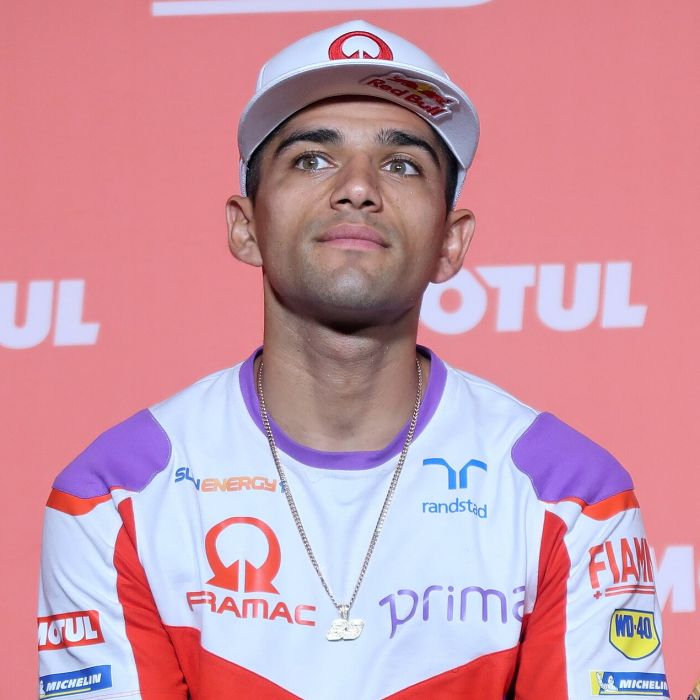
The world of MotoGP has witnessed countless tales of triumph, perseverance, and unexpected turns of fortune. Few stories, however, encapsulate the unpredictable nature of premier class motorcycle racing quite like that of Jorge Martín Almoguera, the Spanish rider who now carries the coveted number 1 plate for Aprilia Racing.
Born in Madrid on January 29, 1998, Martín's journey to MotoGP's pinnacle began in the most humble of circumstances. Like many Spanish motorcycle racing prodigies, his first taste of competition came through minimoto racing, where he claimed his inaugural title in the Alevin Minimotos Championship in Madrid in 2008 at just ten years of age. This early success provided the foundation for what would become a methodical and impressive climb through motorcycle racing's junior categories.
The transition to international competition came in 2012 when Martín made his debut in the Red Bull MotoGP Rookies Cup, the series specifically designed to identify and nurture future MotoGP talent. His adaptation to this higher level of competition was swift and decisive. After using 2012 as a learning year, Martín finished as runner-up in the 2013 series, demonstrating the consistency and racecraft that would become hallmarks of his career.
Race Results
The breakthrough moment arrived in 2014 when Martín was crowned Red Bull MotoGP Rookies Cup champion. His dominant campaign featured six victories and four additional podium finishes, performances that immediately caught the attention of World Championship teams. This success opened the doors to the Moto3 World Championship, where Martín would continue his methodical progression through motorcycle racing's established pathway to MotoGP.
Career Journey
Martín's Moto3 career reached its zenith in 2018 with a masterful championship-winning campaign that showcased his complete arsenal of skills. Clinching the title at the Malaysian Grand Prix, Martín's season statistics told the story of a rider operating at the peak of his abilities: seven race victories, three additional podium finishes, and an remarkable ten pole positions. These numbers reflected not just raw speed, but the tactical intelligence and pressure management skills essential for championship success.
Team Dynamics
The natural progression led Martín to Moto2 in 2019, joining the prestigious Red Bull KTM Ajo team. This move represented both an opportunity and a challenge, as the intermediate class has historically served as the final proving ground before MotoGP. The transition required adapting to more powerful machinery while maintaining the precision and racecraft that had served him so well in the lightweight category.
What makes Martín's current position particularly intriguing is his move to Aprilia Racing, carrying the number 1 plate that signifies championship-level expectations. This represents a significant shift in his career trajectory, moving from the developmental phases of his junior categories to a position where he must deliver results at MotoGP's highest level.

Aprilia Racing's decision to secure Martín's services reflects the Italian manufacturer's commitment to competing at the sharp end of the MotoGP grid. The team has undergone significant evolution in recent seasons, transforming from a development-focused operation into a genuine contender for race wins and championship honors. Martín's arrival coincides with this upward trajectory, creating a partnership with considerable potential.
The challenge facing Martín in his current role extends beyond mere adaptation to new machinery. Carrying the number 1 plate brings psychological pressure and elevated expectations that can either elevate a rider's performance or create additional complications. The transition from being a promising prospect to a rider expected to deliver championship-level results represents one of motorcycle racing's most demanding career phases.
Martín's racing style, developed through his progression from minimoto to World Championship level, combines calculated aggression with tactical intelligence. His ability to secure ten pole positions during his Moto3 championship season demonstrated pure speed, while his seven victories that year showed the racecraft necessary to convert qualifying pace into Sunday results. These skills remain relevant in MotoGP, though the increased complexity of premier class racing demands their application at an entirely different level.
The Aprilia RS-GP package represents sophisticated technology that has shown race-winning potential in recent seasons. The manufacturer's engineering approach, combined with Martín's proven ability to maximize motorcycle performance, creates an intriguing technical partnership. Success will depend on how quickly rider and machine can achieve the precise setup balance essential for consistent MotoGP competitiveness.
Looking ahead, Martín's career trajectory positions him at a crucial juncture. His progression through motorcycle racing's traditional development pathway has been exemplary, marked by championship success and consistent performance improvement. The move to Aprilia Racing with the number 1 plate represents the culmination of this development process, but also the beginning of an entirely new challenge.
The coming season will provide definitive answers about Martín's ability to translate junior category success into MotoGP championship contention. His methodical career progression suggests a rider with both the talent and mental approach necessary for premier class success, but MotoGP's unforgiving nature means that past achievements guarantee nothing about future results.
For Aprilia Racing and Jorge Martín, the partnership represents mutual opportunity. The manufacturer gains a rider with proven championship credentials and the hunger to establish himself at MotoGP's highest level, while Martín gains access to competitive machinery and the platform necessary to pursue his ultimate career objectives.